
The paths leading to mindfulness are unique to everyone, yet they also carry a universal imprint: the quest for deep peace or a spark of joy. This impulse can also be born from a desire to “do well,” in harmony with one’s own values and in connection with one’s professional, family, or social life. Whatever path brings you to mindfulness, you are welcome.
Mindfulness is the awareness that arises when we pay attention, intentionally and non-judgmentally, to the experience of the present moment.
Mindfulness is practiced through formal meditation and informal practices.
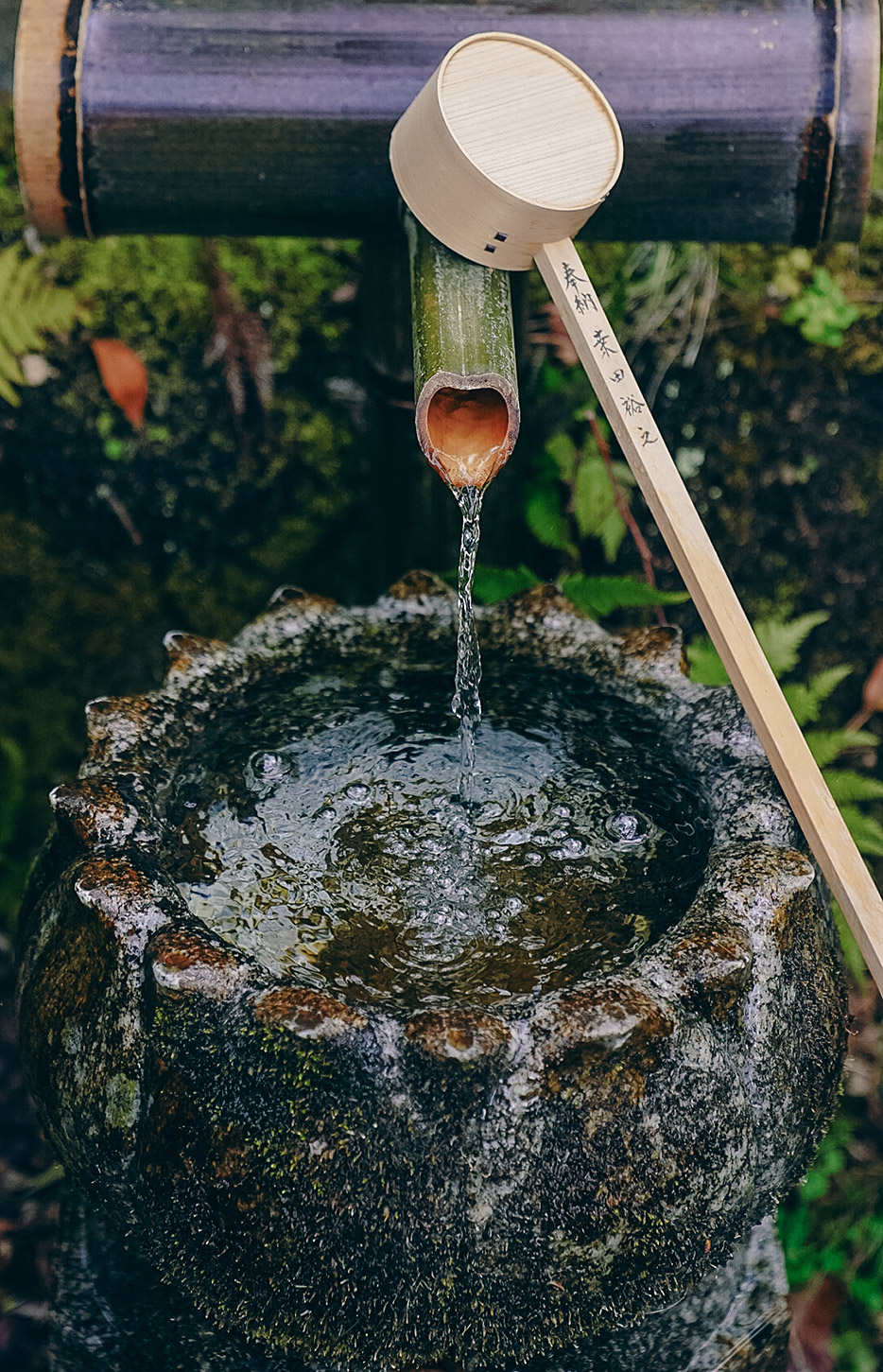
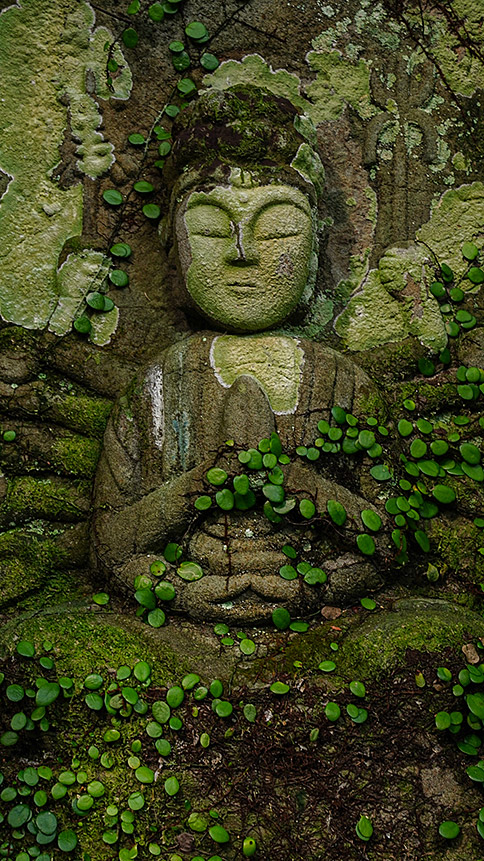
Mindfulness meditation was born from a fruitful encounter between two worlds: that of ancient wisdom, rooted in the Buddhist tradition, and that of modern science focused on health and care.
In the late 1970s, Jon Kabat-Zinn, a biologist at MIT (Massachusetts Institute of Technology) and a practitioner of yoga and meditation, had the intuition to introduce these presence practices into the hospital setting, where stress and suffering are often most acute.
Thus, the MBSR (Mindfulness-Based Stress Reduction) program was born at the University of Massachusetts, paving the way for a new dialogue between medicine, psychology, and self-knowledge.
Today, mindfulness is spreading far beyond hospitals: into schools, businesses, and homes, where people are simply seeking to inhabit their lives more fully.
Practicing mindfulness means training oneself to be present to what is there—thoughts, emotions, sensations, the movements of the world—with open and kind attention.
It is a training of the heart and mind that helps us see more clearly, to respond rather than react, and to cultivate peace in the midst of turmoil.
Scientific studies confirm what experience shows:
mindfulness strengthens resilience to stress, calms the body, clears the mind, and opens an inner space of freedom and kindness.
But beyond the benefits, it is perhaps above all a way of living, a way of returning, again and again, to the simplicity of the breath, to presence with oneself, others, and the life unfolding right now.
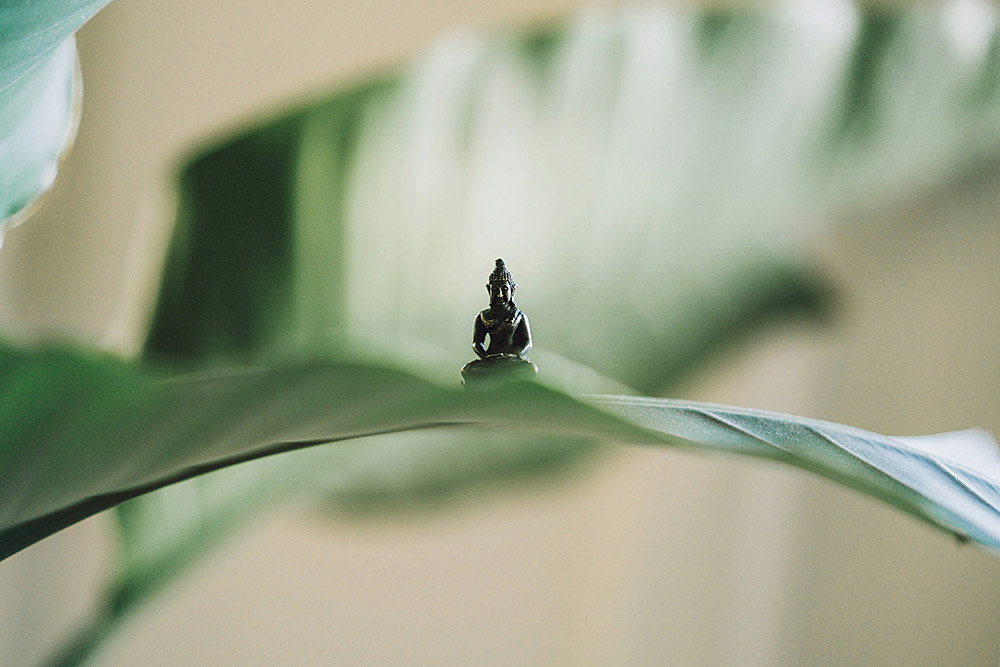
Mindfulness-Based Stress Reduction (MBSR) is a structured 8-week journey of mindfulness exploration. Entirely secular, the practices offered invite you to welcome pain in all its forms, to respond wisely to moments of stress, and to more quickly regain balance and clarity after life’s turbulence.
Validated by scientific research, Mindfulness-Based Stress Reduction (MBSR) has shown that it can profoundly transform the lives of those who practice it.
This structured, secular journey invites you to develop attention to the present moment with openness and kindness. Each week, during a 2.5 to 3-hour group meeting, you will progressively explore different practices and ways of relating to your body, emotions, and thoughts to better navigate life’s challenges.
Orientation – The program begins with an introductory session that presents secular mindfulness, its scientific foundations, and its applications for medical and psychological difficulties and daily challenges. Participants also discover the group learning environment and one of the core practices.
Weeks 1 to 3 – Daily practice begins, accompanied by dialogue and sharing. Participants learn to observe their perceptions, reactions, and habits. Curiosity and openness develop, and mindfulness begins to weave into ordinary life, beyond formal meditation.
Weeks 4 to 5 – The focus is on how mindfulness can interrupt stress cycles and improve responses to difficult situations. Participants explore their reactions to stress and discover strategies to respond more skillfully and in alignment with their values.
Intensive Session – A full day of practice (7.5 hours) allows for deepening the techniques learned and fully experiencing attention, kindness, and curiosity. It is a time to observe one’s life with fresh eyes, without the usual distractions.
Weeks 6 to 7 – Daily practice continues, with a focus on interpersonal relationships and managing strong emotions—both one’s own and those of others. Participants learn to apply mindfulness “off the cushion,” in real life, and to cultivate resilience and well-being.
Week 8 – Closing – The final session revisits the practices learned, celebrates progress made, and sets new intentions for maintaining daily practice. Each participant leaves with a renewed understanding of themselves and tools to integrate mindfulness continuously into their lives.
We are living through a time of confusion, a crisis of values where many feel powerless in the face of the world’s complexity. Yet, it is often in the heart of chaos that the possibility of a collective awakening is born—a call to act, to transform society from within. As James Hillman wrote: “To get out of this black hole, it’s going to take a hell of a lot of love! A sudden and total recognition of the beauty of this planet, a passion that, momentarily, will ignore all rational support.”
This lucid love, this ability to feel the beauty of the world even in turmoil, is perhaps the starting point for a possible re-enchantment.
The practice of mindfulness opens a space where this inner transformation meets social engagement. It teaches us to see how our thoughts, emotions, and reactions are conditioned by the dominant culture—a culture often marked by individualism, competition, and fear. By cultivating presence, we can free our perspective, rediscover the depth of our connections, and participate in the emergence of a more responsible, inclusive, and meaningful society.
For while mindfulness calms the mind, it can also awaken consciousness. It supports a broader perspective, listening to others, and recognizing our interdependence.
It nourishes an activism imbued with compassion, an ethic of care and solidarity, and an engagement capable of uniting interiority and action. In this movement, every breath can become a political act, every look a gesture of alliance, every silence a form of resistance to the fragmentation of the world.
Perhaps we are collectively witnessing a paradigm shift: that of a renewed humanism where inner transformation is no longer separate from social transformation. Mindfulness then becomes a path of reconciliation between the inside and the outside, between the intimate and the collective—an art of living that opens the possibility of a more just, conscious, and deeply alive world.
Invitations to meditative practices and inspiring retreats.
Copyright © 2026 Sensati

Nous utilisons des cookies pour améliorer votre expérience sur ce site.
En poursuivant votre navigation sur ce site, vous consentez à l'utilisation de cookies.
Gérez vos préférences en matière de cookies ci-dessous :
Essential cookies enable basic functions and are necessary for the proper function of the website.
